

We have a choice. Do we want the price of electricity to go up or down?
The charge for electricity delivery accounts for half of our monthly electric bills and has been increasing by 6% per year. That increase will continue if electricity consumption continues to grow slowly (e.g. 0.5% to 2% per year). Consumption could grow much faster; and, if it did, then the cost to deliver each kilowatt hour (kWh) would decline.
If everyone had heat pumps and EVs, electricity consumption would double (at least). What most people don’t know is that the existing electric grid could handle that. In fact, the grid usually has twice the capacity we use today.
In 2026, even with the high price of electricity in Rhode Island, heat pumps are cheaper to operate than oil- or propane-fueled heating systems; and EVs are cheaper to operate than gasoline or diesel vehicles.
If Rhode Island Energy gave monthly electricity rebates to users of new heat pumps and EVs, that would spur more people to buy heat pumps and EVs sooner. The rebates should, of course, be just a fraction of the money collected from owners of new heat pumps and EVs for the delivery of the electricity those machines use. The remaining fraction would reduce how much everyone else must pay for the privilege of electricity delivery. Everybody could get lower annual energy bills.
Something like this is already happening in other parts of the country. Seasonal heat pump rates in Massachusetts discount the delivery charge by roughly $0.06/kwh for 100% the electricity used by homes with heat pumps between November and April. PSEG Long Island offers a “residential electric heating” rate that provides a 40% discount on the energy delivery charge for usage above 400 kWh per month between October through May.
Rhode Island Energy already issues annual credits to owners of batteries enrolled in ConnectedSolutions, its demand management program. The battery credits are based on measurements of average kW delivered to the grid during demand response incidents. The electricity bill rebates we propose for owners of heat pumps and EVs would work in much the same way – based on measured or estimated usage, issued monthly rather than annually, and addressing many more machines than the small number of batteries currently enrolled in ConnectedSolutions.
If these new electric bill rebates or “beneficial electrification credits” were to start in 2027, the effects would be as shown in the chart below.
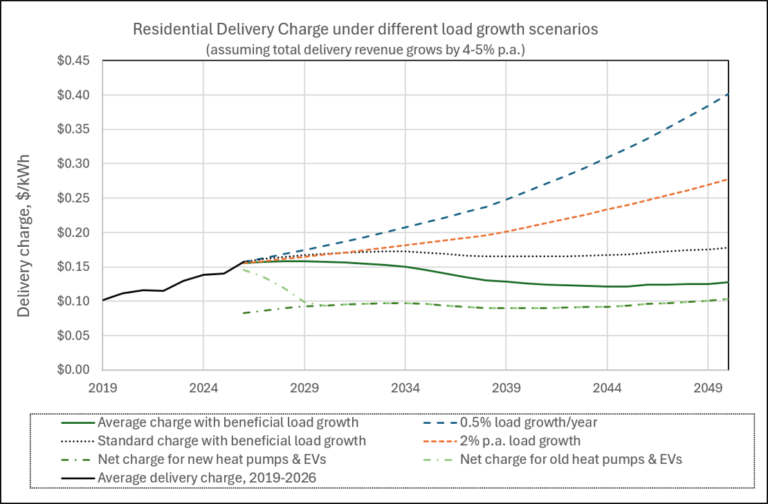
Heat pump and EV users would get credits worth $0.075/kWh.
Depending on how much electricity was used by their heat pumps and EVs, that could be worth $200-$1000 per year per household,
It would be very helpful for most EVs and heat pumps to participate in ConnectedSolutions. That would help Rhode Island Energy defer the need for expensive grid upgrades, minimize spikes in the wholesale price of electricity, and mitigate the risk of rolling blackouts. During those few hours of the year when grid capacity is tight, the company can signal EV chargers and heat pumps to pause charging or run slower. Customers can override those signals if they urgently need charging, heating, or cooling.
Alternatively, the suppliers and owners of heat pumps and EVs can program those machines to do the right thing automatically, adjusting how much power they use during those hours when grid operators are most likely to need demand reduction. And whenever they wish, the owners of those machines can easily override that programming.
Either way, if heat pump and EV owners want the special benefits of monthly credits or reduced delivery rates, they should help when they can, to the extent they can, adjusting their own demand to help keep the lights on and to push electricity costs down for all ratepayers.
For more information on how this would work, email info@cheapenergy.solutions and ask for the 20+ page report — How and Why Rhode Island Electric Utilities Should Offer Beneficial Electrification Credits Based on Electricity Usage by Heat Pumps and EVs.